
Manual Probe Station |
||||||||||||||
 |
||||||||||||||
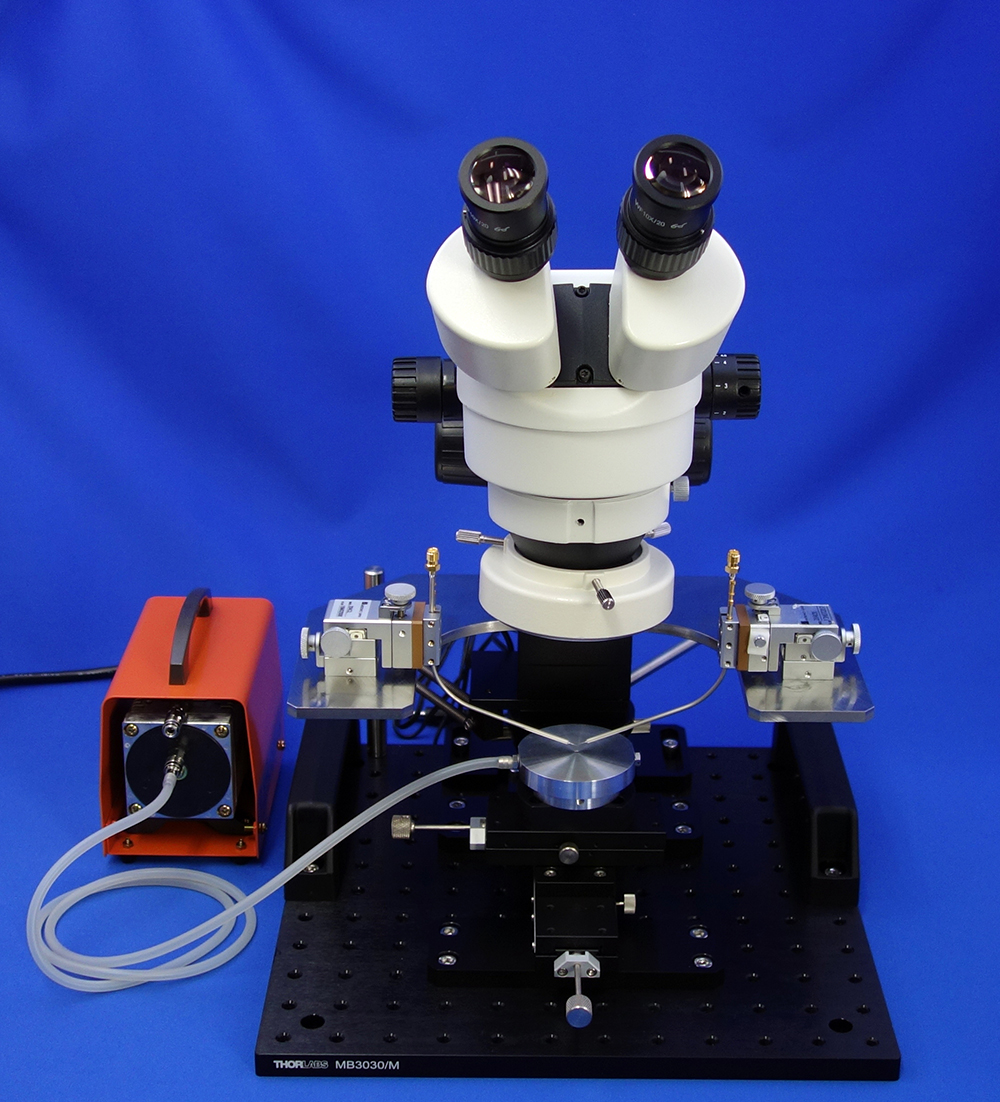
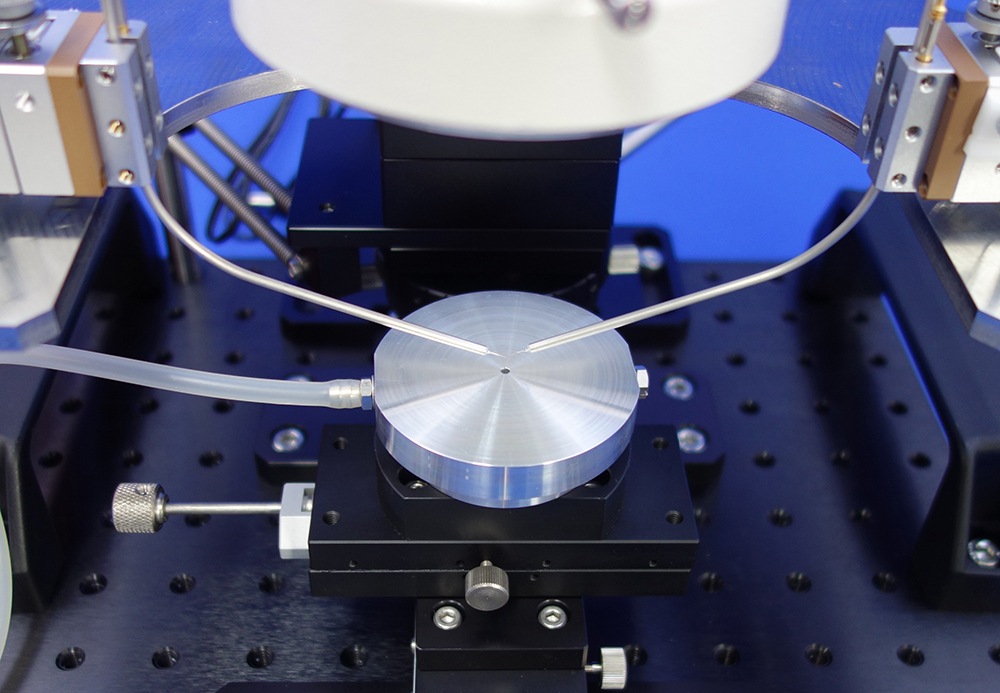
| This manual probe station is designed to evaluate the electrical characteristics of semiconductor devices, including current–voltage (I-V) characteristics. A probe station performs electrical measurements and evaluations at the wafer level by bringing probes (needles) into contact with the electrodes of devices such as ICs, LSIs, transistors, and diodes formed on a wafer. This system allows precise positioning of probes on wafer electrodes while observing through a microscope, providing stable electrical contact for high-precision measurements. It supports a wide range of semiconductor research, development, and quality evaluation tasks, including I-V measurements, resistance measurements, and contact checks. The system consists of a manually raised and lowered platen, XYZ-adjustable manipulators, a stereo microscope, and an XY stage equipped with a vacuum sample chuck. It can be used with various measurement instruments, including source measure units and multimeters. |
||||||||||||||
■Specifications |
||||||||||||||
|
||||||||||||||
■Vacuum Sample Chuck |
||||||||||||||
 |
||||||||||||||
*Specifications and appearance are subject to change without notice for product improvement. |
||||||||||||||
■What Is a Manual Probe Station? |
||||||||||||||
| A manual probe station is a measurement system for evaluating the electrical characteristics of semiconductor devices and electronic components, such as current–voltage (I-V) and capacitance–voltage (C-V) characteristics. Probe needles are manually positioned to make precise contact with microscopic electrodes on the device under test. Connected measurement instruments then apply signals and acquire the resulting responses. The system primarily consists of a sample stage, platen, positioners, probe needles, and base plate. The sample stage holds samples such as wafers and chips. A manual XY stage beneath it allows fine positioning of the device to be measured, enabling sequential measurements of multiple devices on a wafer. The platen is a vertically movable platform that supports the positioners holding the probe needles. The positioners provide fine adjustment of the probe needle positions along the X, Y, and Z axes. Used together with a stereo microscope, they allow precise alignment of the needle tips with the electrodes. To perform a measurement, first move the platen to its bottom position (home position) and operate the positioners to align the probe needles accurately over the electrodes. Then bring the probe needles into contact with the electrodes and perform the measurement. After measurement, raise the platen to separate the probe needles from the electrodes, and move the sample using the XY stage to position the electrodes of the next device. Lower the platen again to perform the next measurement. Repeating this sequence allows multiple devices on the wafer to be measured efficiently in succession. Manual probe stations are widely used in research and development, prototype evaluation, in-process inspection, and failure analysis because of their simple construction, ease of operation, and relatively low installation cost. Their flexible configuration also allows the number of probes and instrument setup to be adapted to the application, supporting a wide range of measurement requirements. |
