Cryogenic Infrared Photoluminescence Measurement System |
||||||||||
 |
||||||||||
|
Photoluminescence (PL) is a nondestructive technique for evaluating electronic states, defects, and impurity levels in materials.
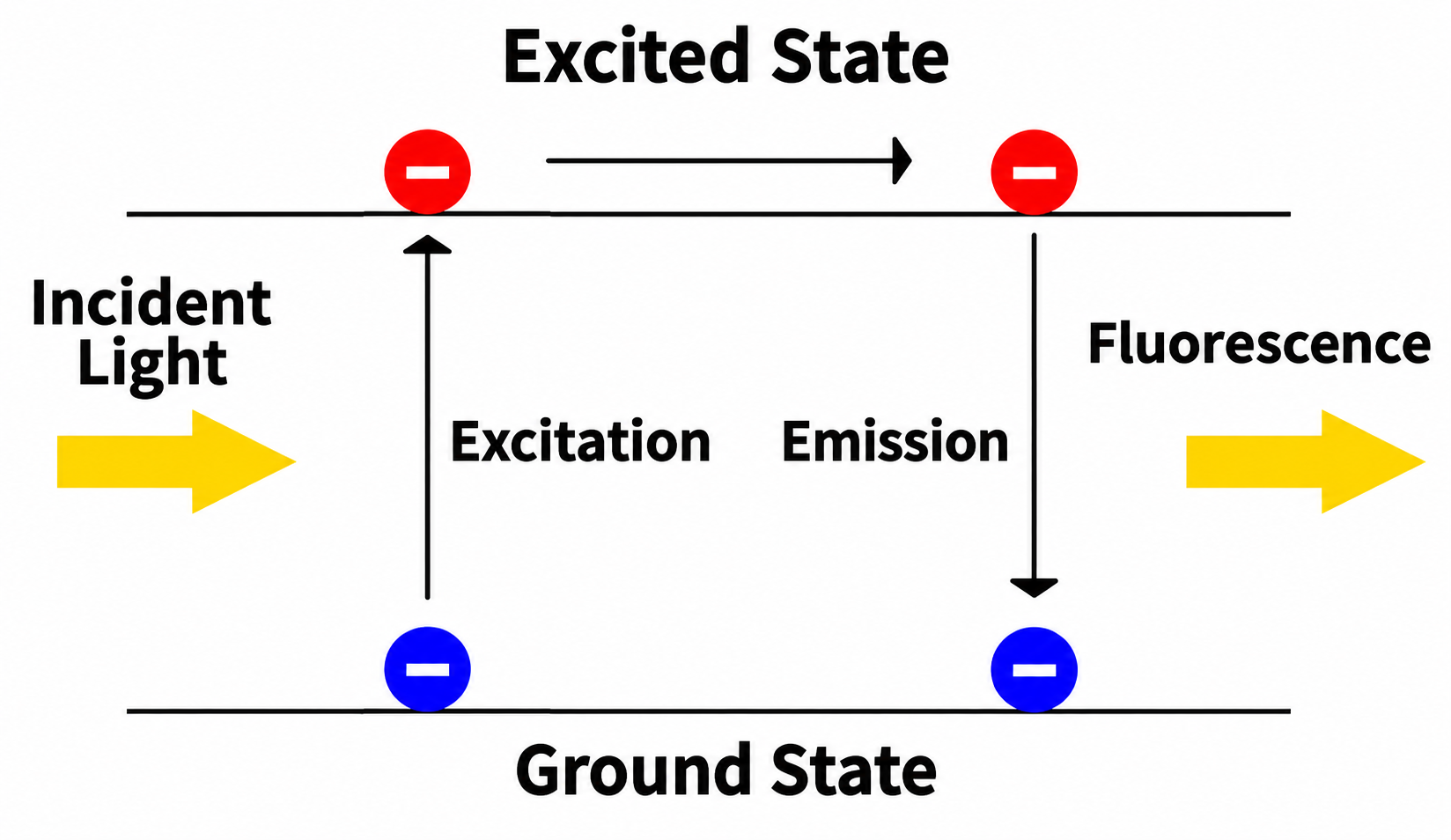
Light is used to excite electrons, and the luminescence emitted as the excited electrons return to the ground state is spectrally analyzed and detected.
Analysis of emission peak energies, intensities, and spectral widths provides information about the material's band structure,
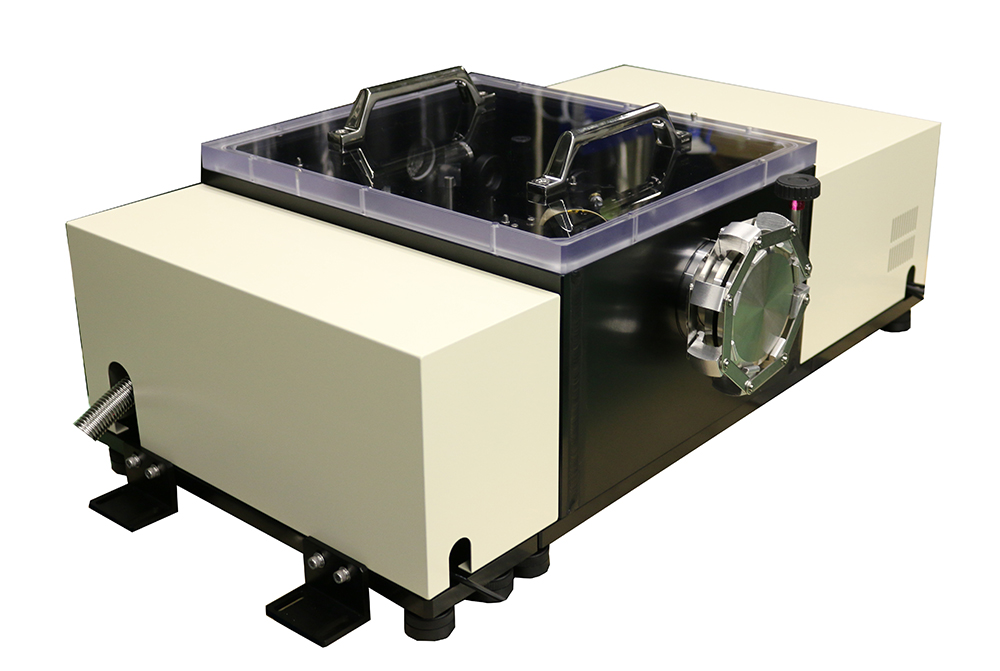
lattice perfection, and trace impurity distribution. This system is equipped with a 532 nm laser as its excitation source and is primarily designed to measure emission in the infrared region. It is suitable for characterizing infrared light-emitting devices and photodetectors operating in the near-infrared wavelength range. The system incorporates a cryostat that cools the sample to 4 K, enabling infrared photoluminescence measurements under cryogenic conditions. This allows detailed analysis of fine emission features and excitonic emission that are difficult to observe at room temperature. Measurements can provide the following information:
|
||||||||||
■Specifications |
||||||||||
|
||||||||||
*Specifications and appearance are subject to change without notice for product improvement. |
||||||||||
■Basic Principles of Photoluminescence (PL) |
||||||||||
|
Photoluminescence (PL) is an optical technique that detects and analyzes the light (photons) emitted when a material is illuminated with high-energy excitation light. Electrons in the valence band are excited to higher energy levels, such as the conduction band, and subsequently return to the ground state, emitting light in the process. This phenomenon is widely used to evaluate electronic states and assess material quality, particularly in semiconductors and phosphors. As illustrated in the diagram, electrons at the ground-state energy level, often the top of the valence band, absorb energy from incident excitation light and are excited to a higher energy level, typically the conduction band. This process creates electron–hole pairs.
However, excited electrons do not necessarily recombine immediately through a radiative transition. In many cases, they undergo relaxation processes such as those described below before recombination occurs.
Because of these processes, the emission spectrum observed in PL measurements does not necessarily directly reflect the energy difference between the incident photons and the bandgap. It is also influenced by the various relaxation pathways within the material. PL is a highly sensitive, noncontact, nondestructive characterization technique. In addition to analyzing band structures and energy levels, it can provide comprehensive information about crystallinity, defect density, and impurity distribution. It is particularly important in materials development and quality control for semiconductor devices, as well as in the characterization of quantum dots and low-dimensional structures. |
||||||||||
■What Is Internal Quantum Efficiency (IQE)? |
||||||||||
|
Internal quantum efficiency (IQE) indicates the fraction of carriers (electrons and holes) generated in a semiconductor that recombine radiatively, emitting light.
Definition: IQE is an important parameter for evaluating the effects of non-radiative recombination in materials and structures. |
||||||||||
■Evaluating Relative Internal Quantum Efficiency (IQE) Using Low-Temperature PL Measurements |
||||||||||
|
In this method, the PL intensity at low temperature, typically around 10 K, is treated as the maximum emission due to radiative recombination. Relative internal quantum efficiency (IQE) is calculated by comparing this intensity with the PL intensity at room temperature (300 K).
Assumptions:
Approximate formula for relative IQE: |
||||||||||
■Steps for Calculating Internal Quantum Efficiency (IQE) Using Low-Temperature PL Measurements |
||||||||||
|
||||||||||
■What Is External Quantum Efficiency (EQE)? |
||||||||||
|
External quantum efficiency (EQE) is the ratio of the number of photons emitted outside a semiconductor device (such as an LED or solar cell) to the number of injected or generated carriers (electrons).
Definition: EQE represents the actual light-emission efficiency of a device. It is measured using methods such as absolute PL measurements with an integrating sphere or measurements under electrical excitation. |
||||||||||
■Measuring External Quantum Efficiency (EQE) with an Integrating Sphere (2π Measurement) |
||||||||||
|
External quantum efficiency (EQE) can be calculated by measuring the light emitted by a device (spectral radiant flux) using an integrating sphere and comparing it with the number of injected electrons. The following method uses the radiant flux measured over the forward hemisphere (2π solid angle).
|
||||||||||
■Relationship Between External Quantum Efficiency (EQE) and Internal Quantum Efficiency (IQE) |
||||||||||
|
EQE and IQE are related by the following equation:
where: Light extraction efficiency is affected by total internal reflection caused by refractive index differences, device structures such as reflective layers and surface patterning, and optical absorption. IQE describes the light-emission efficiency inside the material, while EQE describes the efficiency of light actually emitted outside the device. The maximum IQE is 100%, whereas EQE is typically lower. |